What is rowing?
In Samoa, rowing already has a name and a season. The fautasi — forty to fifty oars, a captain, a drummer, and a village behind every seat — pulls for Apia Harbour on Independence Day, and across the water American Samoa's crews race for Flag Day. Samoan already has the word for what those crews are doing: alo. To row. Olympic rowing is that same word in a different boat.
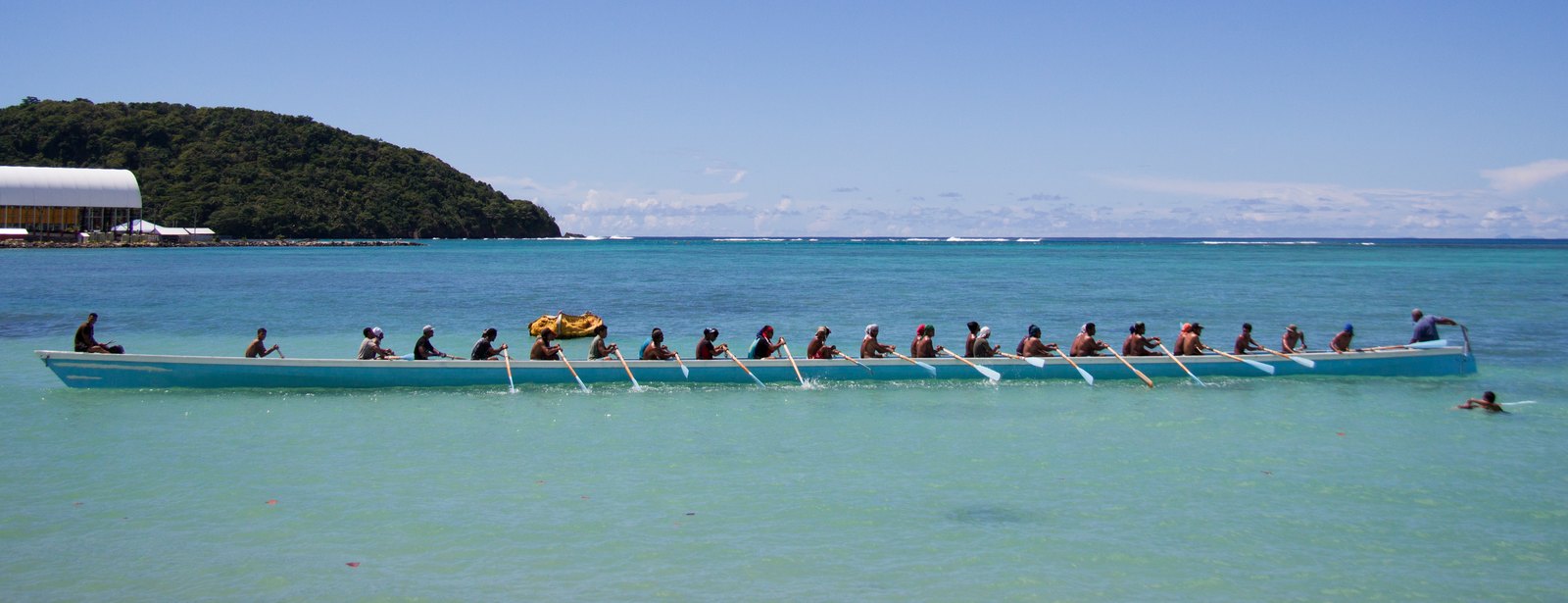
The village boat: fautasi training, Upolu — photo: Andrew Moore, CC BY-SA 2.0

Same stroke, smaller boat
Olympic rowing takes the act every fautasi crew already knows — driving a boat with oars, backs to the bow — and puts it in a small, light racing shell: one sculler with two oars, or crews of two, four, or eight. The seats slide, so the legs do as much of the work as the back and arms. What changes is not the stroke. It is how few of you there are in the boat. As one fautasi rower put it after switching to Beach Sprint: "You're your own crew, whatever mistakes that you've done it's on you" (World Rowing, 2025).
Nothing in that stroke belongs to men alone, and Samoa said so on its own water first: Vaimasenu'u Zita Martel has skippered the fautasi Segavao since 2001 — the first woman to captain a fautasi — and in 2020 an all-women's crew raced Apia Harbour for the first time. Olympic rowing takes that as the standard — women race every event, in every boat class, in every country.
Flat water: two thousand metres in lanes
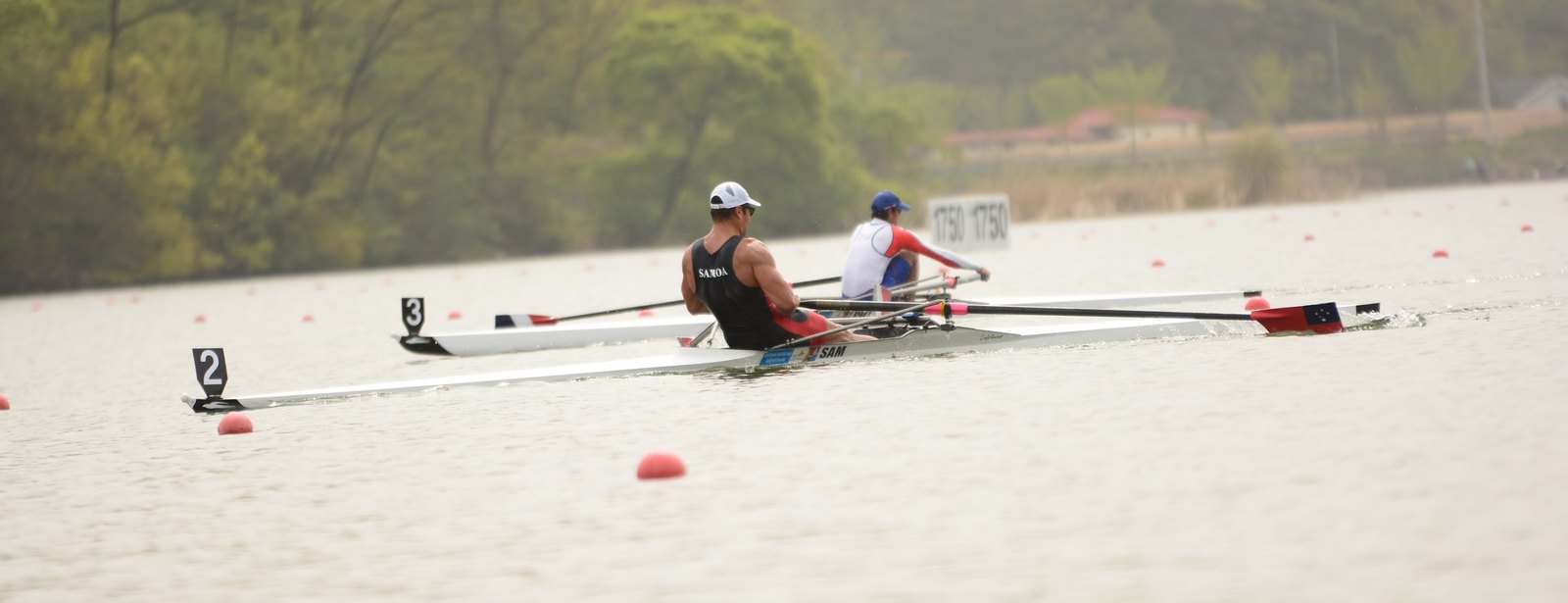
The classic race is 2,000 metres in buoyed lanes on calm water — singles, doubles, quads, pairs, fours, and the famous eights. It has been on the Olympic programme since Paris 1900; the 1896 regatta was blown out and never rowed. It is where Samoa's rowers have raced internationally before. It also asks for long, flat, sheltered water and a marked course.
Surf: Beach Sprint
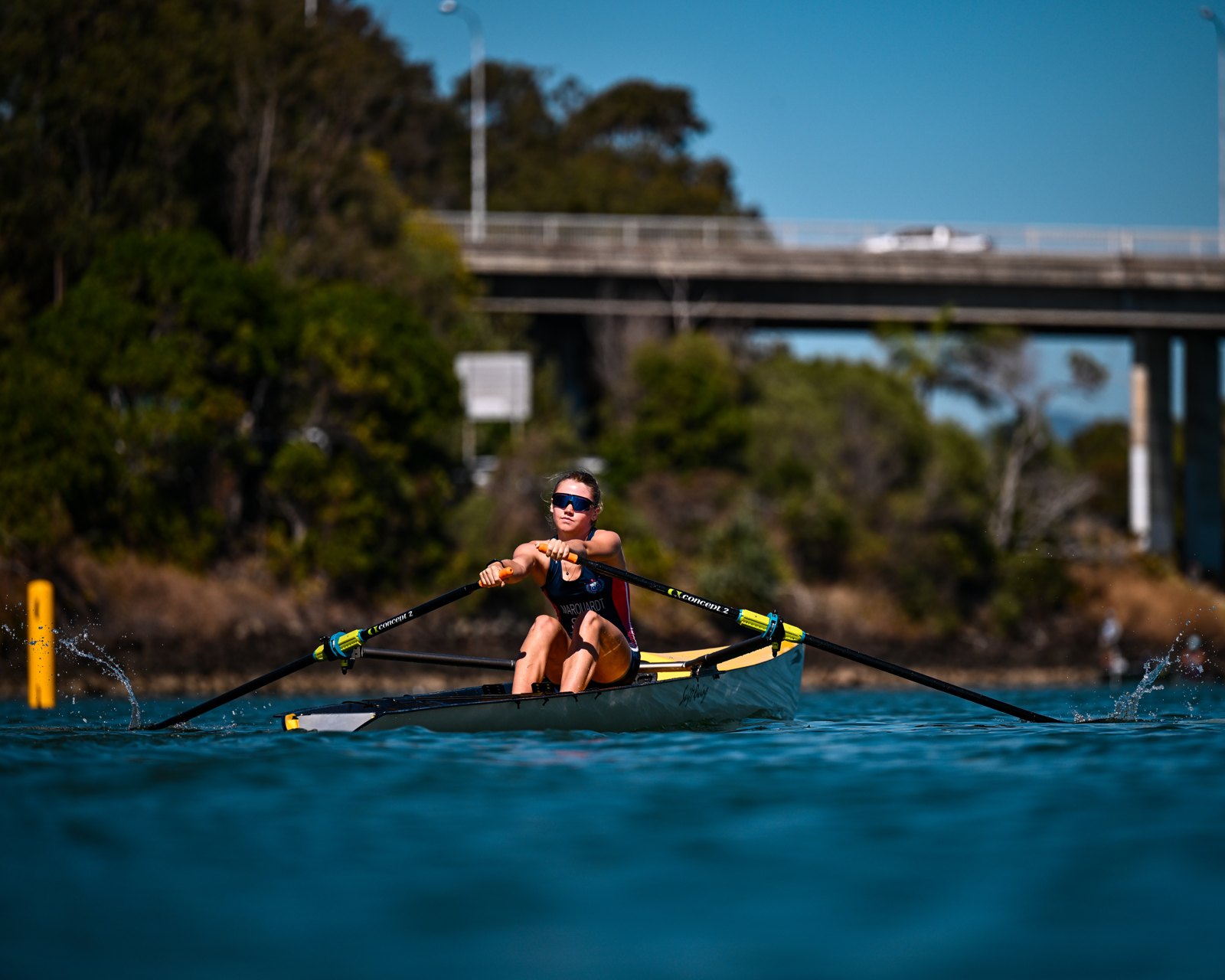
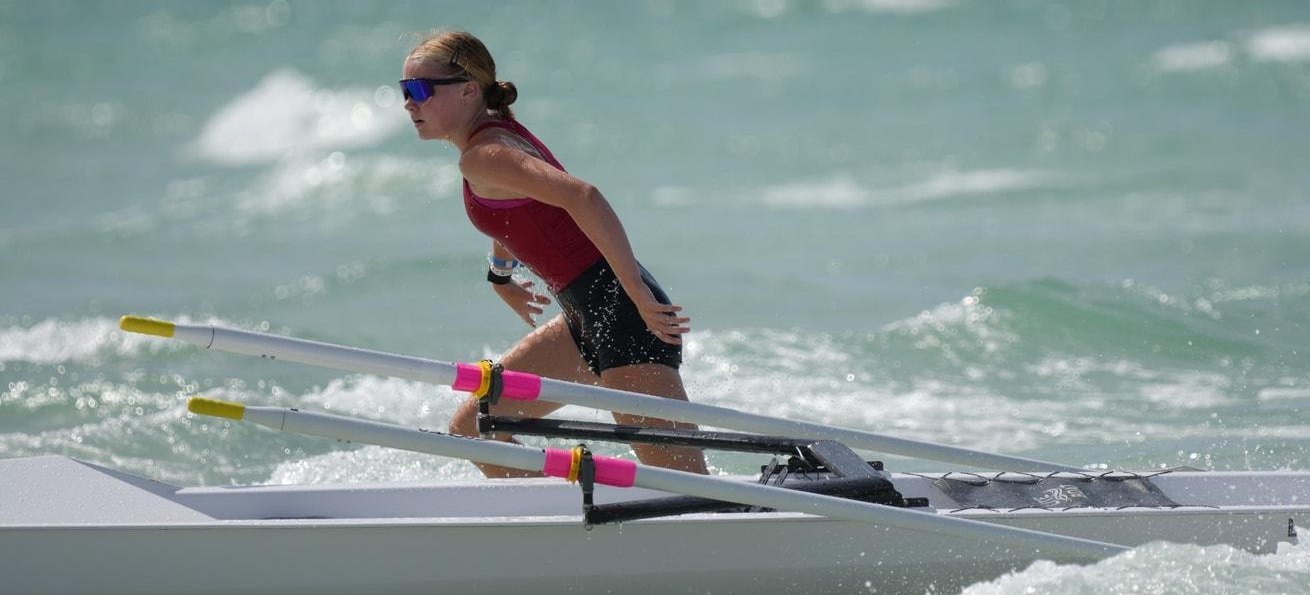
Beach Sprint solo at the turn buoy — Alia Marquardt for Samoa, Currumbin Creek, September 2026 · Photo: Brad Redfern Photography
The other race suits Samoa's coast. Beach Sprint starts on dry sand: sprint fifty metres down the beach, push a coastal boat out, row 250 metres through the surf, slalom the buoys, turn 180 degrees around the last one, row 250 back, then jump out and run up the beach to the finish. About 600 metres, two boats head to head. A time trial seeds the draw; after that it is straight knockouts, race after race in an afternoon. It makes its Olympic debut at Los Angeles 2028 and is the focus of World Rowing's development programme in Oceania. American Samoa raced its first crews at the World Rowing Beach Sprint Finals in 2025; Samoa's athlete won the federation's first international medal, a bronze in a composite Women's U19 Double, at the Oceania and Australian Beach Sprint Championships in September 2026.
To go deeper, World Rowing's illustrated guide to coastal rowing covers the boats, the surf skills, and the racing formats: Coastal Rowing — a World Rowing guide (PDF, 22 MB).
Dry land: the erg
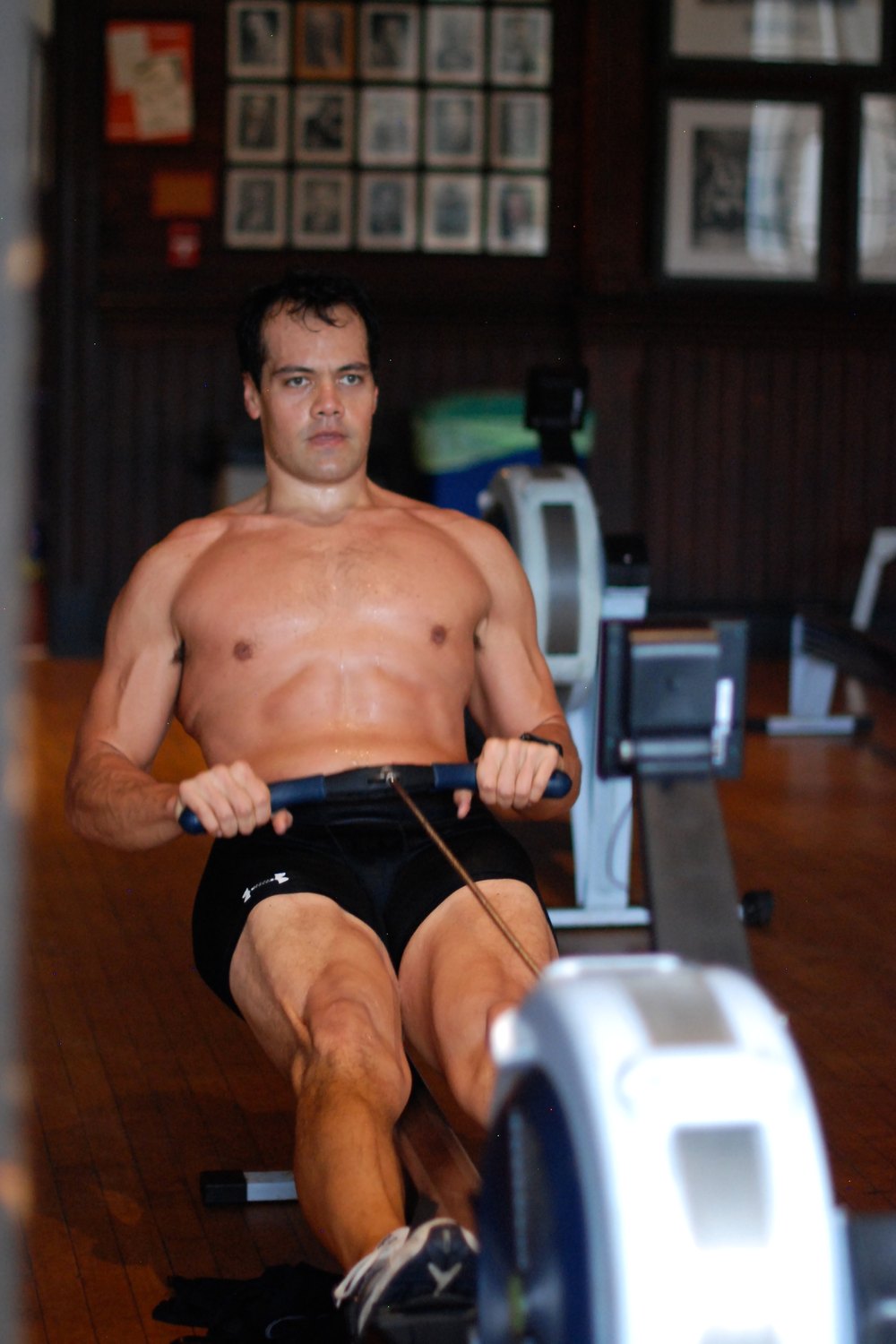
The machine that started it — boathouse erg room
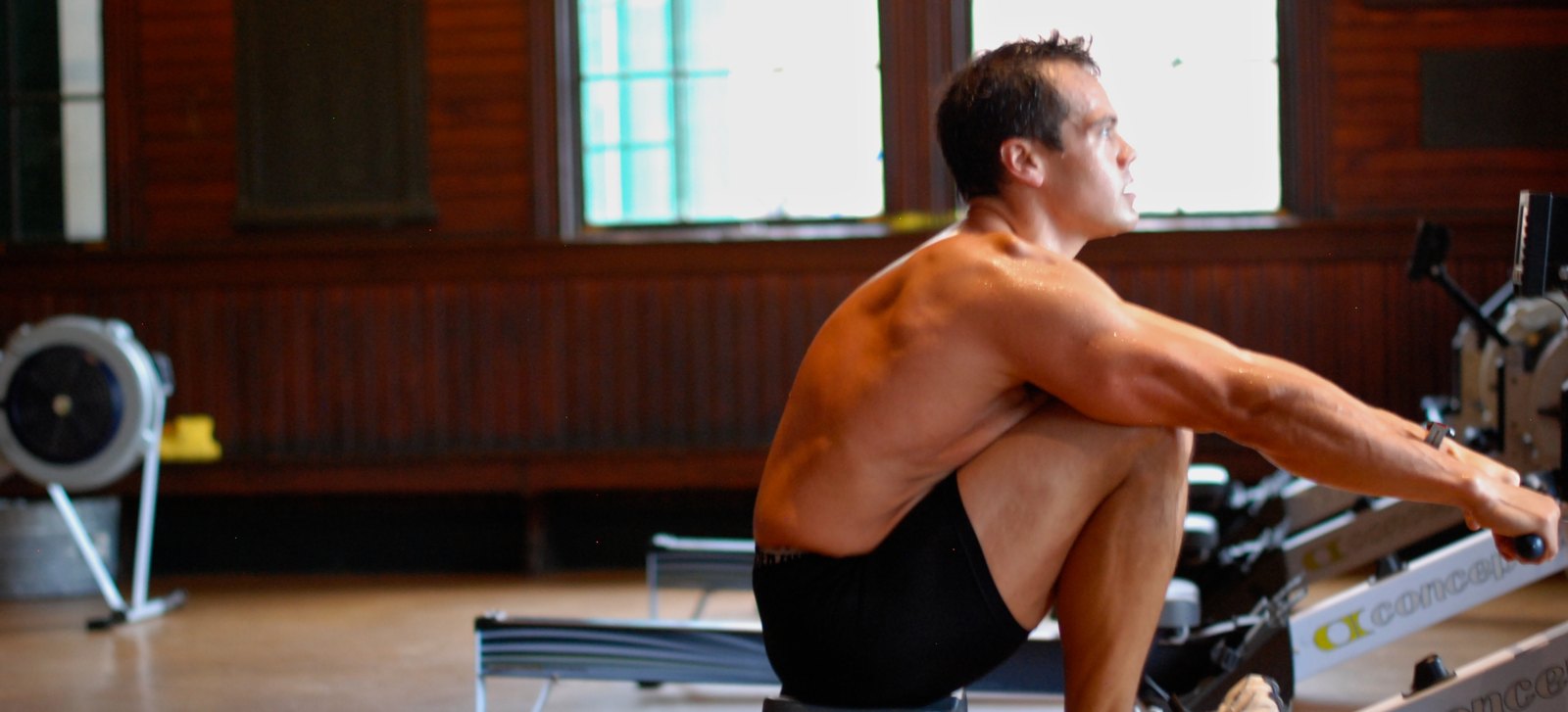
Neither race starts on the water. Both start on a machine. The ergometer, the erg, is the rowing stroke with the water taken out. It gives one number: how fast you can move 2,000 metres, or 500, under your own power, with no lane draw and no wind. National teams and university programmes read those numbers before they watch anyone row, and World Rowing runs a world championship on the machine alone.
That is why Samoa Rowing starts indoors. You do not need a boat, a harbour or a calm morning to begin. The Association's first programme puts rowing machines in schools and runs indoor rowing as a sport of its own, with school competitions and prizes that are places in learn-to-row courses and camps. More on the About page →
Where Samoa fits
Samoa Rowing does not run the fautasi; the villages and districts do. What the Association is building is the road from that harbour, through the erg, to flatwater and Beach Sprint, and a Samoan on the start line when Beach Sprint opens at LA 2028 and again at Brisbane 2032. Sāmoa alo va'a: Samoa rows. If you have pulled a fautasi oar, sat on an erg at the gym, or never touched either, talofa lava. Get in touch.